
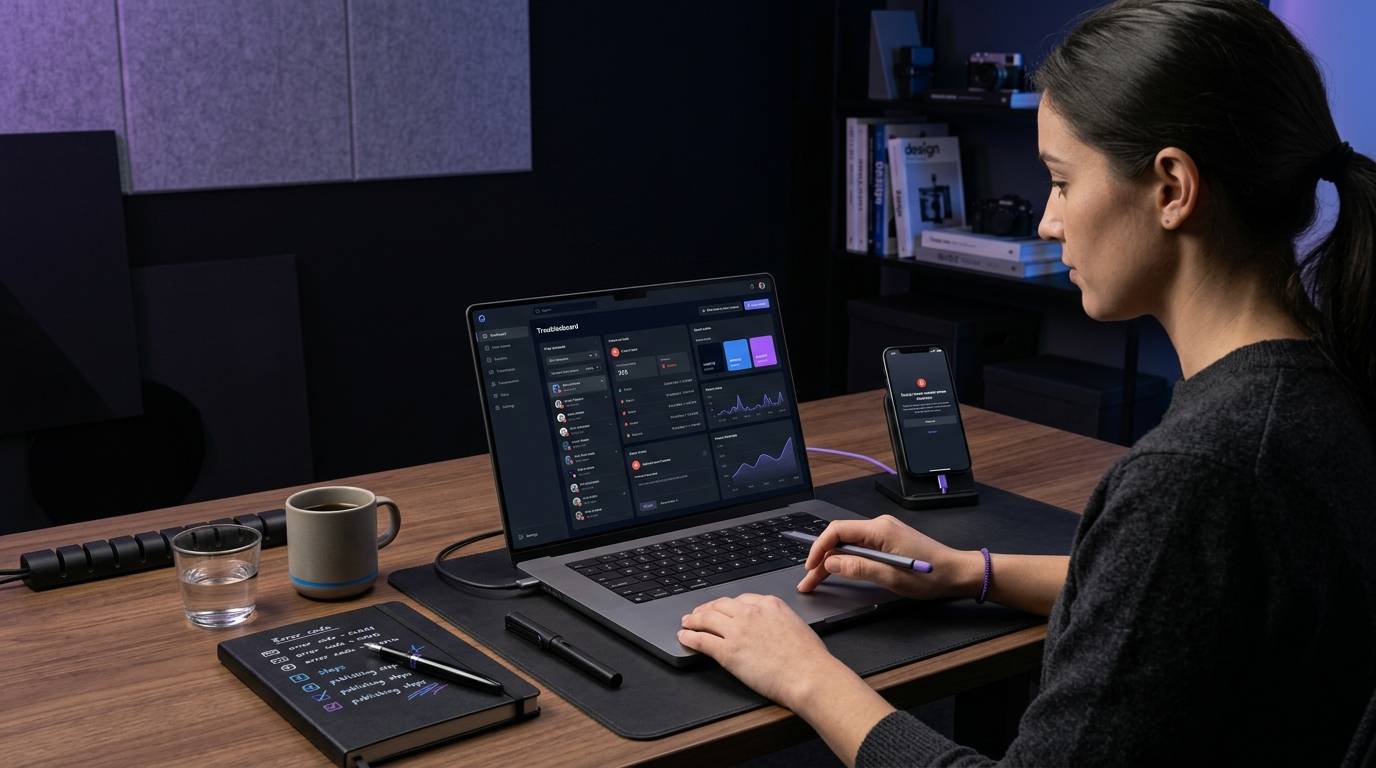
When a scheduled social media post fails to publish, the immediate reaction is often frustration or confusion. You check the dashboard, see an error badge, and wonder whether the network went down or the scheduling tool failed.
Publishing failures are operational incidents rather than simple tool errors. When a post fails, you need a methodical way to diagnose the failure, prevent duplicate posts, and restore normal publishing. This guide provides a systematic operations framework to identify the root cause of failed posts, missed queues, media upload rejections, and permission breakdowns.
Publishing failures stem from distinct operational layers including authentication, asset encoding, rate limits, and platform processing. By treating failed posts as structured incidents, social teams can isolate root causes, execute clean recovery actions, and establish safeguards against future disruptions.
Key Takeaways
- Treat “scheduled” as a queued intent and “published” as an independently verified outcome on the live feed.
- Diagnose publishing issues sequentially across account permissions, media parameters, scheduling configuration, and platform API health before attempting any retry.
- Stop repeated blind retries, which risk duplicate posts, automated rate limits, or platform spam flags.
- Reconcile manual publishing fallbacks directly in your scheduling system to prevent stale queue executions.
- Track publishing reliability metrics to identify recurring authentication drops and media encoding issues.
The Operational Layers of Social Publishing
Social media publishing relies on a multi-stage delivery pipeline. A failure rarely means that an entire platform is down. More often, a breakdown occurs at a specific point between your workspace and the network feed. Understanding these operational layers allows you to isolate issues quickly.
- Workspace / Queue - Authorization - Media Processing - Network API - Live Destination
Publishing failures generally fall into six distinct operational layers:
Account Security and Platform Restrictions
The social network may place temporary restrictions or security challenges on the profile or Page. If a native account has unaccepted terms of service, suspicious login flags, or policy warnings, automated publishing endpoints will reject new submissions.
Permissions and Authorization
Third-party publishing tools interact with social platforms through granted permissions and access tokens. Tokens expire, passwords change, and administrative roles shift. If an admin disconnects their personal profile or revokes access, the connected publishing channels will fail.
Content Constraints and Media Validation
Each network enforces strict specifications for aspect ratios, video bitrates, file sizes, container formats, and character counts. An asset that passes validation on one platform may fail immediately on another.
Media Container Processing
For platforms like Instagram, publishing video or carousel content is a two-step process. The API creates a media container, processes the asset on platform servers, and then executes the final publication command. Attempting to publish before server-side processing finishes causes the call to fail.
Queue Configuration and Time Zones
A post can be scheduled correctly in your planning interface but fail to go live due to mismatched time zone settings, daylight saving shifts, or corrupted queue schedules.
Platform Availability and Rate Limiting
Platforms enforce rate limits on API endpoints to prevent abuse. If an account publishes too many updates rapidly, the network returns rate-limiting responses such as HTTP status 429. Widespread platform outages or API service disruptions can also halt delivery.
A Systematic Four-Phase Troubleshooting Sequence
When a publishing failure occurs, avoiding panic is the first step toward resolution. Following a structured incident response process prevents rushed decisions, duplicate publications, and corrupted campaign queues.
Phase 1: Triage Impact and Establish Urgency
Not every failed post requires immediate intervention. Categorize the issue before taking action:
- High-Impact and Time-Critical: Product launches, live event updates, safety notices, and breaking company announcements. These require immediate investigation and possible manual fallback publishing.
- Routine and Recoverable: Evergreen content, educational tips, and recurring brand posts. These can be held, fixed, and rescheduled without audience impact.
- Potentially Harmful if Delayed: Time-sensitive promotional offers or flash sales. If publishing is delayed past the relevant window, the post should be cancelled rather than published late.
Phase 2: Confirm Destination Status Before Retrying
Never click retry without checking the live destination account first. Scheduling interfaces can display an error state or timeout warning even if the social network successfully received and published the post.
Open the destination profile or Page in a separate browser window. Check the live feed, the video tab, and any platform-native drafting tools such as Meta Business Suite. If the post is already visible to the audience, record the false-negative status in your internal logs and do not republish.
Phase 3: Trace the Failing Layer
Work through the delivery pipeline in order:
- Verify Native Login: Log into the destination platform directly using native credentials. Check for security prompts, policy alerts, or password reset demands.
- Review User Roles: Verify that the user who authenticated the publishing tool still holds administrative or publishing privileges on the target Page or channel.
- Inspect Media Files Locally: Download the source image or video file. Play it in a local media player to ensure the file is not corrupted, empty, or encoded in an unsupported codec.
- Compare Native vs API Publishing: Try creating a draft or publishing a simple text update natively on the platform. If native publishing fails, the issue is on the social network’s side. If native publishing works, the issue lies in the API connection, permissions, or asset formatting.
Phase 4: Execute a Controlled Recovery Action
Once the root cause is identified, choose the appropriate recovery action:
- Repair and Reschedule: If the file format was invalid or copy exceeded character limits, adjust the content and set a new publication time.
- Reauthorize the Channel: If an access token expired, have the authorized account administrator reconnect the channel through your centralized social publishing workflow.
- Manual Fallback Publishing: If an urgent post failed due to a platform API outage, publish it directly through the native mobile app or web interface. Immediately delete or unschedule the pending post in your planning tool to prevent a duplicate post when the API recovers.
- Cancel the Post: If the moment has passed or publishing late would cause confusion, cancel the item entirely.
Diagnostic Procedures for Authorization and Access Issues
Authorization breakdowns are the most common source of automated publishing errors. Social networks require explicit user consent and role delegation to permit third-party tools to publish content.
Token Expiration and Session Revocation
Access tokens are secure digital keys that allow publishing software to speak with social networks on your behalf. These tokens do not last forever. They expire naturally after set intervals, or they invalidate immediately when specific security events occur.
Common token invalidation triggers include:
- A team member changes their personal social network password.
- A user turns on two-factor authentication or updates security settings.
- The social network detects suspicious login locations and resets active sessions.
- An administrator removes the third-party application from their account settings.
When troubleshooting access failures, ensure the person reconnecting the channel holds primary administrative ownership. For Facebook Pages and Instagram Professional accounts, ensure the authenticating user holds full task access in Meta Business Manager. If an account loses connection regularly, review your team’s access hierarchy and establish dedicated administrative profiles for connecting social media accounts.
Permission Scopes and Page Delegation
A connected account can appear healthy in your tool dashboard while lacking specific publishing permissions. This happens frequently when social platforms introduce new permission scopes that were not granted during initial setup.
For LinkedIn Pages, an authenticated user must hold Super Admin or Content Admin permissions within the LinkedIn organization settings. If an employee is downgraded to an Analyst role, scheduled posts authored under their token will fail.
For X, delegating access through Media Studio creates specific permission boundaries. An account granted Studio Publisher access can publish media from their own handle using shared library assets, but cannot publish directly on behalf of the parent account without native account delegation. Always confirm the exact operational role assigned to the connected user.
Troubleshooting Media Upload and Encoding Errors
Media files represent the heaviest operational payload in social publishing. Networks apply aggressive automated scanning, transcoding, and containerization to uploaded files. If a file deviates slightly from expected standards, the platform will drop the upload.
Video Codecs, Bitrates, and Container Types
Video files can look identical on your desktop while containing completely different internal compression structures. Most social platforms require the MP4 or MOV container format, encoded with the H.264 video codec and AAC audio codec.
When diagnosing video upload failures:
- Container vs Codec: Ensure the file is not an unsupported container like AVI or WMV renamed to.mp4.
- Audio Track Requirements: Platforms like Instagram and TikTok may reject video files that lack an audio stream entirely. If your video is silent, render it with an empty, silent AAC audio track rather than exporting without audio.
- Variable Frame Rates: Videos recorded on mobile devices often use Variable Frame Rate (VFR) encoding. Social publishing APIs often fail to transcode VFR footage properly. Re-export the video with a Constant Frame Rate (CFR) of 30 or 60 frames per second.
- Bitrate Ceilings: Excessively high bitrates cause upload timeouts. Keep standard 1080p web video bitrates between 8 Mbps and 15 Mbps to prevent platform processing bottlenecks.
Platform-Specific Media Constraints
Platforms maintain distinct structural boundaries for media assets:
YouTube Video Diagnostics
According to YouTube Help documentation, upload errors frequently stem from unsupported file formats or browser processing timeouts. YouTube supports standard formats such as MP4, MOV, WebM, and AVI. If an upload hangs at processing, verify local file playback first. A corrupted file that fails to play locally will consistently fail YouTube server-side ingestion.
Instagram Media Processing Bottlenecks
Instagram publishing via API uses an asynchronous container workflow. The publishing tool first submits the image or video URL to create an Instagram media container. Instagram’s servers download the file, validate its aspect ratio, and transcode the video.
The third-party tool must poll the container status until Instagram returns a status of FINISHED. If the tool attempts to publish the container while it is still IN_PROGRESS, the request fails. Inaccessible or slow source media hosting URLs will cause the container creation phase to time out before processing starts.
Aspect Ratio Strictness
Instagram rejects posts that do not conform to approved aspect ratio ranges (such as 4:5 for vertical feed posts, 1:1 for square, or 9:16 for Reels and Stories). Submitting an image with an unsupported aspect ratio will trigger an immediate parameter error.
Schedule Configuration, Time Zones, and Queue Conflicts
A post that fails to go live at the expected moment is not always an API error. Mismatched time configurations and queue settings frequently cause apparent delivery failures.
Time Zone Misconfigurations
Time zone settings exist at three distinct levels in a social publishing stack:
- The device time zone of the user scheduling the post.
- The global workspace time zone set inside the scheduling software.
- The native time zone configured inside the target social network account.
If your workspace is set to Eastern Standard Time while your team member schedules a post thinking the tool uses Pacific Standard Time, the post will publish three hours earlier or later than intended.
X interface guidance confirms that scheduled posts display dates and times relative to the user’s current local time zone. When planning campaigns across distributed teams, always record both the numerical time and the explicit time zone abbreviation. Using a unified shared publishing calendar eliminates confusion across multi-regional teams.
Daylight Saving and Clock Drift
Automated scheduling engines rely on synchronized server clocks. During daylight saving time transitions, scheduled queues can experience temporary execution delays if platform schedulers do not handle the one-hour offset cleanly. When scheduling critical launch announcements around transition dates, verify the rendered local time on the destination platform.
Queue Bottlenecks and Overlapping Slots
Placing multiple posts into the exact same minute slot on the same channel can trigger queue collisions. Social networks may interpret multiple simultaneous posts from the same API token as automated spam or an accidental loop.
Stagger posts across a single channel by at least five to ten minutes. This spacing allows platform ingestion pipelines to finish processing media assets and prevents internal rate limiting.
Platform API Outages and Rate Limiting
Sometimes your credentials are valid, your media is perfectly formatted, and your schedule is accurate, yet the post still fails. In these cases, the failure originates in the social platform’s API infrastructure.
Understanding HTTP Status Codes
When an API call fails, the social platform returns a standard HTTP status code accompanied by an error message. Reading these codes helps identify the issue:
- HTTP 400 (Bad Request): The submitted data is invalid. Common causes include invalid media dimensions, exceeded character counts, or unsupported formatting.
- HTTP 401 (Unauthorized): The access token is missing, expired, or invalid. Reauthorization is required.
- HTTP 403 (Forbidden): The access token is valid, but the user lacks the specific administrative permission required for the requested action.
- HTTP 404 (Not Found): The targeted Page, profile, or media container ID cannot be located on the platform.
- HTTP 429 (Too Many Requests): The account or application has exceeded platform rate limits. All publishing activity must pause until the rate-limiting window resets.
- HTTP 500 / 503 (Server Error): The social network’s internal servers are experiencing an outage or temporary overload.
Documented Platform Disruptions
Platform outages can affect specific publishing endpoints while other features remain operational. For example, a documented incident reported by Buffer in September 2025 demonstrated that a disruption in Meta’s media-container API endpoints prevented image and video publishing across Instagram and Threads, while simple text posts or direct native mobile posting continued to work.
When diagnosing sudden multi-account failures:
- Check third-party status pages and official developer portals.
- Determine whether the failure affects only media posts or all post formats.
- Stop initiating repeated bulk retries, which will fail and may trigger secondary rate limits once service resumes.
Common Publishing Mistakes to Avoid
Operational publishing breakdowns often stem from preventable workflow errors. Identifying these patterns helps teams build stronger guardrails.
Retrying Without Diagnosing
Clicking retry repeatedly after an initial failure is a high-risk habit. If the original post is stuck in a processing delay, retrying can publish duplicate posts to your public feed. Always verify the destination feed before retrying.
Using Personal Logins for Shared Agency Channels
When agencies manage client channels, connecting accounts through personal employee profiles creates immediate fragility. If that employee leaves the agency, changes their password, or goes on leave, publishing connections collapse. Use dedicated enterprise administrative accounts or proper partner business delegations instead.
Relying on Universal Media Assets
Exporting a single video file and attempting to publish it across YouTube Shorts, Instagram Reels, LinkedIn, and X without alteration often leads to rejections. Bitrate maximums, audio channel requirements, and file size limits vary across networks. Validate files against destination platform rules before queuing.
Overlooking Crisis and Event Pauses
Leaving scheduled posts active during breaking news, corporate crises, or major emergency events is a serious operational oversight. Crisis management guidelines from industry practitioners emphasize immediately pausing scheduled queues during emergency events. A scheduled promotional post appearing during a company crisis can cause lasting brand damage.
Establishing Ownership and Triage Roles
Handling publishing incidents smoothly requires defined operational roles. Even within small teams, designating clear functional responsibilities prevents duplicate effort and confusion during high-pressure moments.
- Incident Lead
- (Triages urgency, sets recovery strategy)
- Account Administrator Content Owner
- (Manages tokens, permissions (Validates copy, assets
- and platform access) and publication timing)
Incident Lead
The incident lead oversees the troubleshooting process. They assess whether a failed post is time-critical, decide whether to engage a manual fallback, and ensure team members do not perform conflicting actions.
Account Administrator
The account administrator holds primary credentials and administrative rights for social profiles, business managers, and third-party tools. When token errors or permission drops occur, only the account administrator handles reauthorization.
Content Owner and Approver
The content owner understands the strategic intent of the post. If a post fails and publishing is delayed, the content owner determines whether the copy remains accurate or if the post must be cancelled.
Publisher and Operator
The publisher manages the daily scheduling tool and queue health. They track post confirmations, inspect error codes, and reconcile tool queues after any manual publishing actions.
Building an Incident Runbook and Documentation Log
High-performing content operations teams document publishing failures. Recording incidents transforms unexpected errors into structured data that helps improve operational reliability.
Core Incident Log Fields
Maintain a central incident log that captures the following data points for every publishing failure:
- Internal Content ID: The unique title, campaign name, or tracking code for the post.
- Target Network and Handle: The exact account where delivery failed.
- Scheduled Time and Time Zone: The planned delivery timestamp.
- Detection Timestamp: When the team discovered the failure.
- Raw Error Code and Text: The exact HTTP code and platform error string returned by the API.
- Failing Layer: Categorized as Account State, Permissions, Media Format, Processing Timeout, Queue Configuration, or Platform Outage.
- Recovery Action Taken: Categorized as Repaired and Rescheduled, Manual Fallback, Reauthorized Token, or Cancelled.
- Live Outcome Verified: Confirmation that the final live URL was inspected and no duplicate post was created.
Conducting Blameless Operational Reviews
Following the incident management practices established in the Google Site Reliability Engineering framework, operational reviews should remain blameless. The goal of a post-incident review is not to assign personal fault for a missed post, but to identify structural gaps in workflows, tooling, or documentation.
During monthly reviews, analyze your incident logs to evaluate operational reliability:
- On-Time Delivery Rate: The percentage of scheduled posts verified live on the target platform within five minutes of the target time.
- Incident Frequency by Layer: Track whether failures cluster around permission expirations, media formatting errors, or third-party API disruptions.
- Manual Fallback Frequency: Monitor how often your team must bypass automated scheduling tools to publish natively.
Tracking these metrics alongside your wider cross-platform social analytics provides complete visibility into both publishing reliability and audience performance.
Preventive Measures for Social Publishing Operations
Preventing failures before they enter the publishing queue is far more efficient than troubleshooting live incidents. Incorporate these five operational habits into your weekly routine.
1. Conduct Preflight Content Validation
Before scheduling posts, validate file formats, aspect ratios, character limits, and destination channels. Download and test video playback locally. Ensure every link destination uses secure HTTPS protocol and resolves correctly.
2. Maintain an Active Account Inventory
Keep a documented inventory of all social accounts, connected business managers, and designated account owners. Review permission delegations quarterly to remove departed team members and verify that active administrators maintain required platform roles. This approach prevents permission breakdowns when managing multiple social media accounts.
3. Implement Verification Protocols
Never assume a post has published simply because the scheduled time has passed. Establish a daily routine where operators verify that posts scheduled for the previous window are visible on live feeds.
4. Create Clear Manual Publishing Fallbacks
Define clear guidelines for when and how team members are authorized to publish natively during tool or platform outages. Ensure the protocol mandates deleting or unscheduling the queued item in your central calendar immediately after manual publishing.
5. Establish Crisis Hold Procedures
Maintain a clear procedure to pause all outgoing scheduled content across all brand channels with a single operational action. Ensure team leads know how to pause queues instantly during unexpected crises or severe news events.
Next Steps for Content Operations Teams
To improve your publishing workflow and prevent future delivery issues, work through this operational checklist this week:
- Audit your connected social accounts and reauthorize any tokens approaching expiration.
- Verify that team members hold correct administrative roles in native platform settings such as Meta Business Manager and LinkedIn Page Admin.
- Standardize video export presets across your creative team to match strict H.264, AAC, and CFR specifications.
- Review workspace time zone configurations across all scheduling tools to ensure regional consistency.
- Build an operational incident log to track error codes, root causes, and recovery actions.
- Run a simulated manual fallback test to confirm team members can pause queues and publish natively without creating duplicate posts.
Sources
- Instagram posting errors & troubleshooting
- Instagram API Errors for Social Media API Publishing
- Supported YouTube file formats
- Troubleshoot audio or video issues with uploads on YouTube
- Meta Business Suite not posting to Instagram: fixes - AI Social Media
- Practical - Meta Business Suite Schedule Posts Official Help
- Social Media Crisis Management Guide - ICUC
- Social media: protecting what you publish
- SOCIAL MEDIA CRISIS MANAGEMENT GUIDELINES
- (PDF) A Practical Social Media Incident Runbook - GIAC Certifications
- How to manage a social media…
- Scheduled Posts Not Publishing? Fix It Now - PostEverywhere.ai
- Issue Publishing Posts to Instagram and Threads


